

This summer, Ben was lucky enough to spend six weeks in Provence with his young family, discovering new sides to the region that took him by surprise. At the same time (and by coincidence), colleague Michael was visiting some of our favourite small Provencal hotels and natural beauty spots. Both of them returned full of enthusiasm for the lesser-known highlights and unique identity of western Provence.
When we think of Provence, we imagine neat rows of lavender fields spilling down to a glamorous coastline, but further west, where the Rhône carves a path down to the Mediterranean, it’s a very different picture. Here, medieval towns scatter leafy hillsides, and at the mouth of the river, rice paddies give way to a wild coastline that is worlds apart from the built-up shores further east.
The wild Camargue
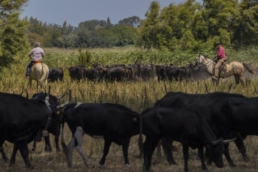
The Camargue caught me by surprise. Despite it being so close to home, I’m ashamed to say I knew very little about this watery wilderness, a place where wildlife is abundant and cowboys roam the land.
The two arms of the Rhône river meet here, creating a vast wetland that attracts flamingoes and wading birds to the salty shallows. The beaches are vast, empty and rugged; you wouldn’t come to sunbathe, but you might come to canter across the sand on horseback – the Camargue is famous for its beautiful white horses.
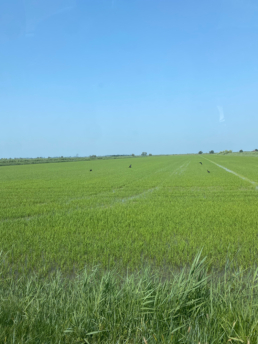
As you go upriver, lush green rice paddies unfold before you like a scene from South East Asia – who knew rice was grown in Western Europe?! Such reliable irrigation from the delta has created soil that’s incredibly fertile, making it ideal for crop growing – something I learnt more about during my first hotel visit.
Stay at: Le Mas de Peint
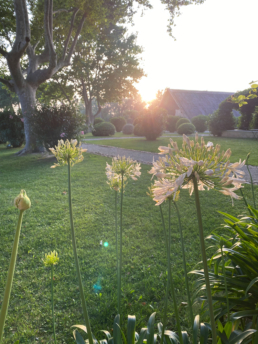
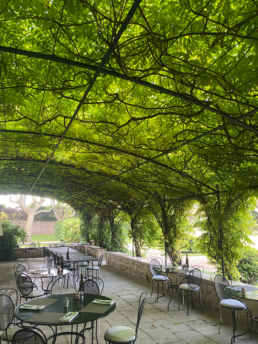
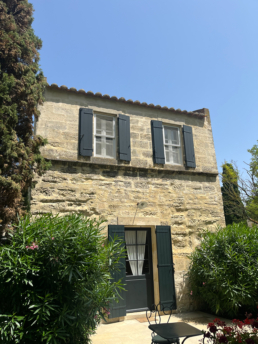
My stay at farm-retreat Le Mas de Peint was a fascinating experience. At first, I was a little perturbed by the bulls heads and cowboy saddles mounted on the walls, but as I learnt more about the history of the estate and the surrounding area, they began to make sense. Le Mas de Peint is a working farm that’s very proud of its heritage. In addition to the hotel, which has 15 rooms spread across the farmhouse and outbuildings, they grow crops and breed cattle and horses. The produce (rice, olive oil, apples) is used in the kitchen to create delicious four-course dinners, a highlight of staying here.
The bulls are used for something rather more unusual. La course camarguaise, a bloodless form of bull fighting, is a big sport around here – the Camargue’s equivalent to the Premier League. The aim is to snatch prizes from the horns of a bull, with games taking place up and down the region. I didn’t catch one myself, but hearing about them was a fascinating insight into the heritage and culture of these parts.
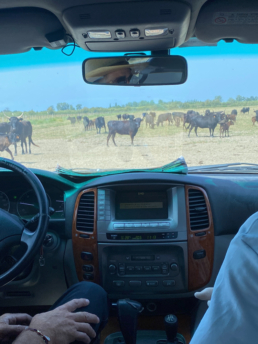
It’s possible to go on guided rides on the farm’s Camargue white horses, but we chose to take a 4×4 tour of the estate with the head honcho, Frédéric Bon. This was a fun, more gentle way to see and hear all about the culture, wildlife and farming; we saw the highlights as we slowly bumped around the farm.
The historic heart
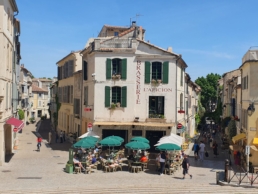
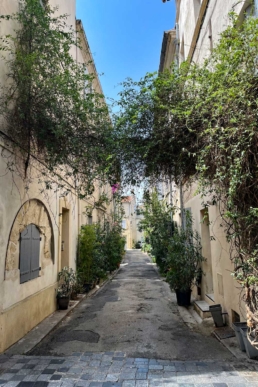
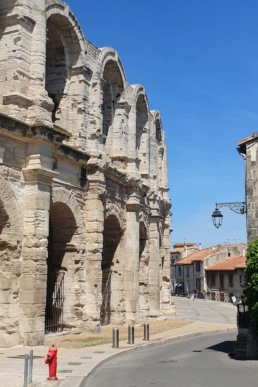
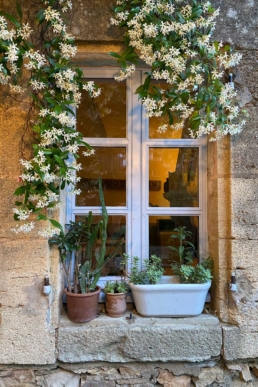
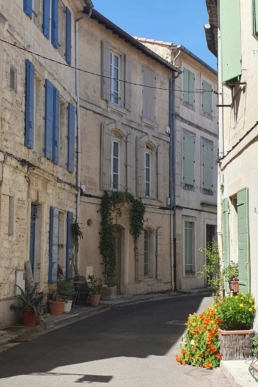
North of the Camargue, astride the lower banks of the Rhône, lies a triangle of beautiful medieval towns which are the historic heart of Provence. At the south, Arles is famous for its Roman amphitheatre and Van Gogh attractions (he lived here for a while), and is one of the loveliest Provençal towns to wander around (much of the centre is car-free). Northerly Avignon is larger – the TGV stops here, it’s 6 hours from London – and famous for its imposing Papal palace, its summer festival and its unfinished bridge. Westerly Nimes (just over the border in Gard) is the unsung jewel of the three, a hive of Roman architecture with an amazingly preserved amphitheatre and temple (now a World Heritage Site).
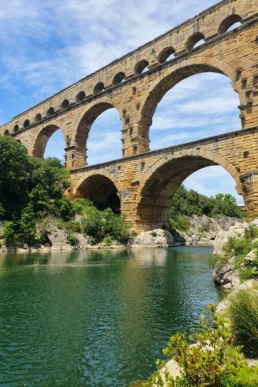
The nearby Pont du Gard – an ancient Roman aqueduct – draws tourists from all over. But don’t be put off by its popularity; it’s a very impressive sight and undeniably vaut le détour. My tip, once you’ve taken in the view, is to follow the quieter stretch of path running alongside the river, where there’s a chance to cool off in the Gardon.
Stay at: Les Sardines aux Yeux Bleus
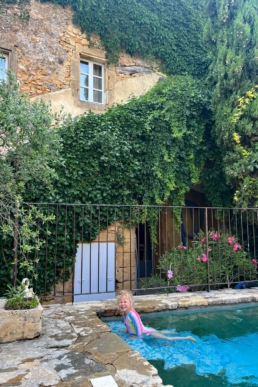
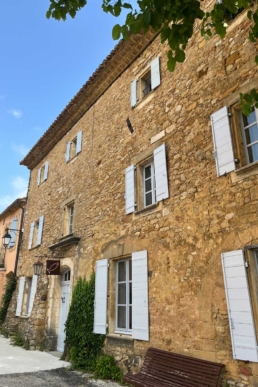
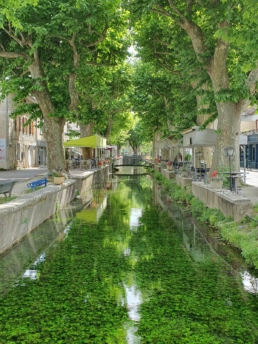
My other top discovery was Uzes, a gorgeous white stone town with a brilliant bi-weekly market in the Place aux Herbes (Wednesday and Saturday mornings), perfect for leisurely wanders broken up by coffee and ice cream stops. We stayed in a dainty hamlet nearby, at a sweet little B&B called Les Sardines aux Yeux Bleus. It had a very relaxing feel to it, and after coming in from the heat, the cool of the building and vibe from owner, Tanur, put us straight into comfort mode.
The character of the building showcases its 12th-century features, with added influences from the owners’ time in Tanzania and India. It is centred around a courtyard bursting with fragrant flowers, and there’s a small pool offering a chance to cool off. There are three rooms and three apartments – all are lovely, though aimed more at couples than families (we felt a bit self-conscious with our noisy toddlers roaming about the place).
The hamlet has no amenities, but that encourages you to explore. We hopped on our bikes and headed to a nearby village for one of our most enjoyable meals of the trip: pizza at a relaxed restaurant on someone’s front lawn.

Allow me to take over as we continue north, into the wilder edges of the Gard and Vaucluse, where the crowds stop and the limestone foothills and river gorges start.
The Cèze Valley
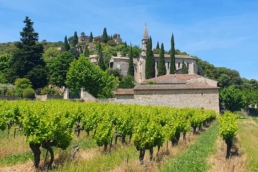
You probably haven’t heard of the Cèze – I hadn’t until I started researching this trip – but it’s a beautiful tributary of the Rhône on its western (Gard) side, joining it near Châteauneuf-du-Pape of AOC wine fame. Its lower reaches are flanked with vineyards and ancient farm estates, its upper reaches with wooded hills and impossibly pretty stone villages – no fewer than three of which (La Roque sur Cèze, Montclus and Lussan) feature in “Les Plus Beaux Villages de France”.
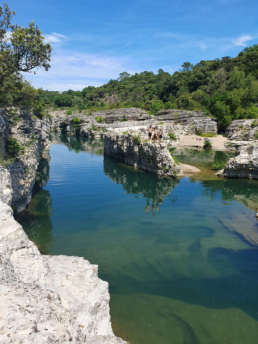
But it was the river Cèze itself, and specifically the deep pools and roaring waterfalls of Sautadet, which caught my wild-swimmer’s eye. Jumping from rocks, swimming up to foaming cauldrons, or front-crawling along the natural lake: it was every drop as invigorating as I’d hoped.
Stay at: Chateau de Montcaud
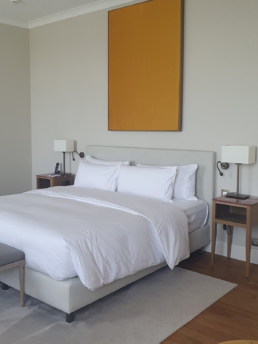
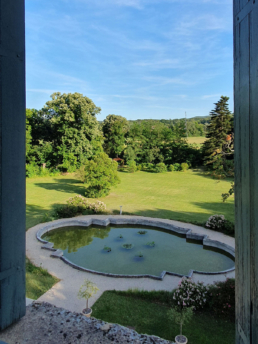
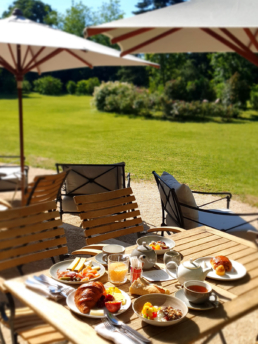
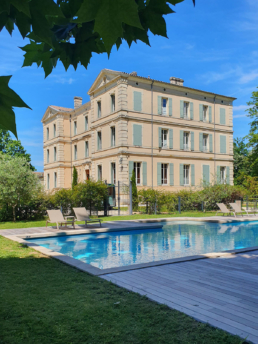
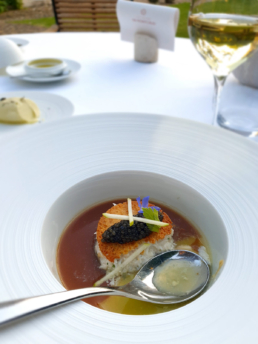
But there’s one more reason to come here, and I think it’s the most compelling of all: Chateau de Montcaud. This 19th-century stately-home-turned hotel is as handsome as they come, with landscaped gardens (including a lake and grotto), huge and elegant bedrooms, plus a Michelin-starred restaurant. And if you’re thinking “That’s not my style”, hold a moment: it’s also surprisingly affordable and totally unpretentious. We lazed in the gardens with our books and rusty tennis games, explored villages and river pools on hotel e-bikes, and dined by moonlight under the linden trees (there’s a more informal brasserie in the old stables). If I had any kind of special occasion to celebrate, I’d come back here like a shot.
The Vaucluse Mountains
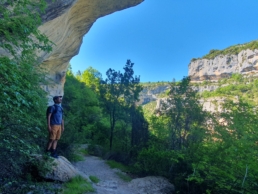
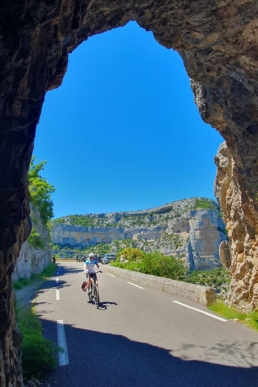
As an avid hiker, I was keen to explore Provence’s Vaucluse Mountains, so I headed east to Mont Ventoux and the rugged Nesque canyon. Here, the cycling and hiking opportunities are spectacular – though not for the faint-hearted. Ascending the 1900m summit, known as the Giant of Provence, is a bucket-list activity for any in-the-know cyclist. But beware: it’s a tough climb!
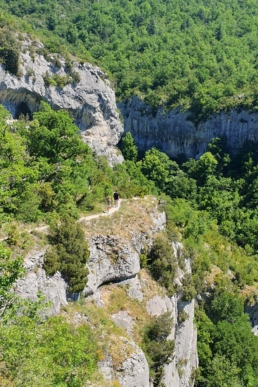
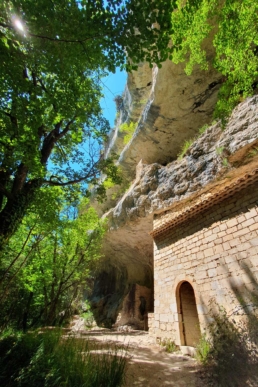
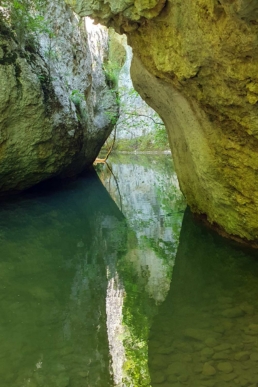
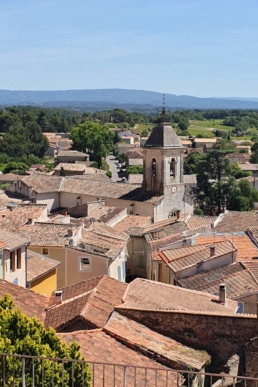
But this time I was headed for its foothills, and on foot. I set off around the Nesque Gorge, starting in pretty Monieux, to the rock-chapel of St Michel – passing seasonal pools to swim in – and back along the opposite side: a spectacular four-hour loop. If you prefer a gentler hike, I loved the two-hour circuit from Beaumes-de-Venise, of dessert wine fame, up to the ruined fort of Durban and the Rocher du Diable. Views stretch north to the Dentelles de Montmirail, and south over the verdant orchards of the Rhone.
Stay at: Metafort
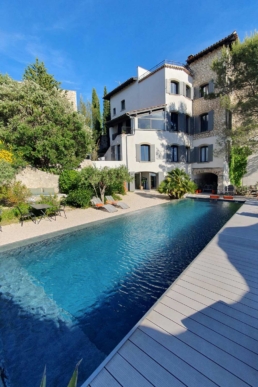
My base was Metafort, an authentic chambres d’hotes that’s dramatically perched atop the gorge, in a pretty, quiet and untouristy village. The place is run by bubbly Elsa and her ex-pro-cyclist hubby Arnaud, who has an encyclopedic knowledge of road cycling in the area. Together, they’ve created a sociable, welcoming, relaxedly chic retreat that’s charmingly Francophone (you’ll need to be able to speak French here).
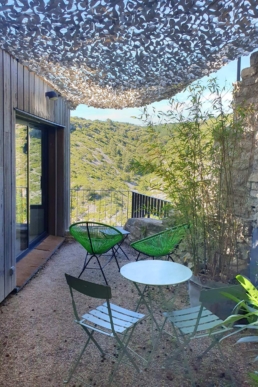
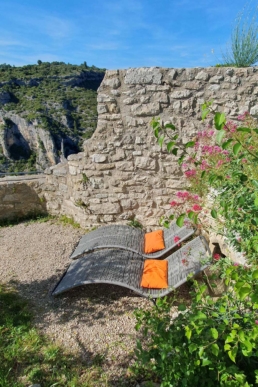
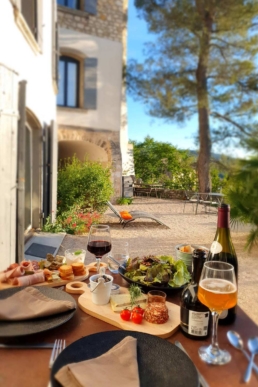
The rooms all have views – some overlooking the gorge, others over rolling countryside. My favourite room was L’Annesque, a contemporary and utterly charming cabin in the garden, with a secluded sit-out and breathtaking gorge views from its huge windows. The only meal on offer is breakfast, but it’s organic and delicious. Otherwise, there’s a shared kitchen-diner with honesty fridges – help yourself to local cordials and homemade desserts – or you can order one of their fabulous cheese-and-meat platters for dinner by the pool, which was a highlight for me.
Date published: 28 Nov 2025
Last updated: 26 Feb 2026